 AegisID: Universal Privacy-Preserving Identity and Sovereign Credential Platform
Created 07 Nov 2026
AegisID is an innovative, next-generation digital identity orchestration platform inspired by the seamless user experience, robust security architecture, and privacy-centric design of the Apple Account ecosystem. While platforms like Apple ID excel at providing unified access to hardware, cloud storage, payment mechanisms, and application-level authentication across Apple's proprietary walled garden, contemporary digital users and modern enterprise workforces operate across inherently heterogeneous operating systems, third-party software suites, and cloud environments. AegisID breaks down proprietary ecosystem silos by delivering an interoperable, sovereign identity framework that incorporates universal WebAuthn/FIDO2 passkey synchronization, zero-knowledge attribute verification, dynamic proxy credential routing, and consumer-facing identity governance. By leveraging decentralized public key infrastructure combined with secure biometric hardware enclaves, AegisID empowers consumers and enterprise organizations to authenticate, authorize, and manage their complete digital footprint without relying on monolithic, platform-locked providers. AegisID incorporates automated privacy relays that mask email addresses, telephone numbers, and device telemetry during third-party sign-ins, establishing an impenetrable barrier against cross-site tracking and data harvesting. For enterprise and independent developers, the platform provides drop-in SDKs and RESTful authentication APIs that emulate the frictionless nature of modern single-sign-on (SSO) systems while eliminating systemic single-point-of-failure liabilities. AegisID harmonizes consumer simplicity with military-grade zero-trust access control, enabling real-time identity recovery, multi-party computation key sharing, and seamless compliance with global data sovereignty mandates. By bridging consumer usability and institutional-grade encryption, AegisID aims to become the definitive neutral standard for privacy-first authentication across mobile, desktop, IoT, and decentralized web architectures.
Industries
Get your First 100 Clicks in ONE MONTH
FREE with AI CMO (Saving £500+)
Save over £1135 in ad value compared to paid traffic.Faster and Higher ROI than traditional SEO services (3–6 months) and lower cost (£500–£2000/month).
SEO Market Overview (Organic Search)
Cybersecurity & Identity and Access Management (IAM)Highly competitive sector dominated by enterprise IAM providers and password managers; acquisition costs reflect strong B2B pipeline value and growing consumer privacy adoption.
0.0%
AI VisibilityGEO / AI Visibility Overview
How visible your brand is inside AI-generated answers
Unlock More Content Ideas
Create an account or log in to explore exclusive blog topics, SEO strategies, and GEO-targeted content generated by AI CMO Maggie
[ Tailored for your brand's next growth leap. ]
Maggie Studies the Tracks Before the Journey Begins.
She learns every detail of your business through deep market research.
Target Problem
Modern digital identity is intensely fragmented and dominated by proprietary walled gardens such as Apple ID, Google Account, and Microsoft Entra. While platforms like Apple ID offer secure, frictionless sign-in and account management, their premier capabilities—such as hardware passkey synchronization, iCloud Keychain sharing, and Hide My Email relays—remain fundamentally anchored within a single vendor's operating system. Users who navigate mixed technology stacks (e.g., an iPhone paired with a Windows PC or an Android tablet) face disruptive friction, fragmented password storage, and security lapses across mismatched ecosystems. Simultaneously, conventional authentication mechanisms that rely on passwords and static credentials remain the leading attack vector for global cybersecurity breaches, accounting for pervasive credential stuffing, phishing, and man-in-the-middle attacks. Consumers are forced to balance vulnerable password reuse against complex third-party password managers, while corporate enterprises endure ballooning support costs for account resets and compliance vulnerabilities. Furthermore, legacy identity providers exploit centralized user data to track consumer behaviors across third-party websites, transforming identity verification into a pervasive surveillance apparatus. AegisID resolves this crisis by establishing an open, sovereign, and cross-platform identity foundation. It abstracts high-security biometric hardware authentication from specific operating system vendors, democratizing privacy-focused tools like ephemeral relays and zero-knowledge attribute verification, thereby restoring full digital sovereignty and frictionless security to end-users worldwide.
Target Regions
Target Audience
Privacy-Focused Digital Consumers
Users who utilize heterogeneous hardware setups across Apple, Android, and Windows and demand unified, privacy-first authentication without corporate data tracking.
Enterprise Security Teams & CISOs
Mid-to-large enterprise IT administrators looking for zero-trust, passwordless authentication solutions that reduce IT helpdesk burdens and eliminate phishing risks.
Software Application Developers
Web and mobile app creators seeking drop-in, privacy-preserving authentication frameworks that convert users higher than traditional registration forms without building custom infrastructure.
Regulated Financial & Healthcare Entities
Organizations governed by strict data protection mandates (HIPAA, GDPR, CCPA) requiring cryptographically verifiable, non-custodial digital identities.
Market Research
The global Identity and Access Management (IAM) market represents one of the fastest-expanding sectors in the cybersecurity landscape. Valued at approximately $16.1 billion in 2023, the global IAM market is projected to reach over $41.5 billion by 2030, expanding at a compound annual growth rate (CAGR) of 14.5% to 16.2% depending on segment-specific acceleration (MarketsandMarkets, Gartner Research). Within this broader domain, the Customer Identity and Access Management (CIAM) and Passwordless Authentication sub-markets are experiencing exponential demand, driven by an urgent worldwide push to neutralize credential-based cyberattacks. According to the Verizon Data Breach Investigations Report, over 80% of web application breaches trace directly back to compromised, stolen, or weak credentials, causing global economic losses exceeding hundreds of billions of dollars annually. Key drivers accelerating this market transition include the formal standardization and browser-level support for passkeys spearheaded by the FIDO Alliance, Apple, Google, and Microsoft. Regulatory requirements such as the European Union's GDPR, the Digital Markets Act (DMA), eIDAS 2.0 digital identity wallets, and the California Consumer Privacy Act (CCPA/CPRA) have placed punitive liability on organizations that mismanage user personal identifiable information (PII). In target regions such as North America and Western Europe, smartphone penetration and multi-device consumer ownership exceed 85%, creating an addressable market of over 600 million cross-platform users who switch daily between personal smartphones, workplace laptops, and home connected devices. By positioning AegisID as a universal, non-custodial bridge across these disconnected ecosystems, the Total Addressable Market (TAM) spans both the $18 billion consumer digital privacy and password manager market and the $23 billion enterprise zero-trust access management segment. AegisID capitalizes on this structural shift away from proprietary, tracking-oriented identity silos toward interoperable, cryptographic sovereignty.
The fundamental paradigm of modern internet identity is at a critical inflection point. For the past two decades, authentication has been treated as a utility layer monopolized by operating system vendors and social media aggregators. Platforms like Apple have proven the immense consumer appetite for seamless identity: with a single Apple Account, users synchronize configurations, authorize multi-tier subscriptions, execute secure monetary transactions via Apple Pay, and authenticate to third-party applications with privacy-preserving email obfuscation. However, this sublime user experience functions as a golden handcuff. When consumers or corporate employees venture beyond Apple's silicon and software boundaries, this unified identity fabric abruptly fractures, reverting users to vulnerable passwords, disjointed two-factor authentication SMS codes, and siloed credential managers. AegisID reimagines this entire model by democratizing the security and elegance of ecosystem-level accounts while decoupling identity ownership from hardware manufacturers. Technologically, AegisID is engineered on top of the W3C WebAuthn specification and FIDO2 standard, augmented by an open-source, non-custodial synchronization substrate. Instead of storing private keys within a single proprietary operating system enclave, AegisID orchestrates multi-device threshold cryptography via Multi-Party Computation (MPC). Under this scheme, an authentication private key is mathematically divided into multiple cryptographic secret shares. One share resides securely within the hardware security module (Apple Secure Enclave, Android Titan M, or Windows TPM) of the user's primary device, a second share is stored in an encrypted zero-knowledge distributed vault, and a third recovery share is generated across trusted guardian contacts or physical recovery authenticators. At no point can AegisID, malicious actors, or state-level adversaries reconstruct the complete key on any server, guaranteeing complete immunity against server-side breaches. Beyond basic credential replacement, AegisID directly targets the pervasive surveillance architecture of the modern web. Traditional single sign-on mechanisms operated by centralized tech conglomerates routinely harvest telemetry data regarding which applications a user accesses, when they log in, and their geolocation. AegisID natively embeds a decentralized identity masking engine. When authenticating with any third-party digital service, AegisID dynamically provisions an isolated, zero-knowledge verifiable credential alongside an ephemeral privacy email relay and dynamic proxy token. The third-party service receives mathematical assurance that the user is legitimate, authenticated, and complies with required access criteria (e.g., identity verification or subscription status), without ever learning the user's real name, true IP address, or permanent contact details. From a regulatory and enterprise integration perspective, AegisID uniquely bridges consumer expectations with institutional compliance frameworks. As jurisdictions worldwide tighten digital privacy mandates—epitomized by the European Union's General Data Protection Regulation (GDPR), the Digital Markets Act (DMA), and the upcoming eIDAS 2.0 digital identity frameworks—organizations face mounting penalties for harboring unencrypted personal data. AegisID equips business clients with lightweight developer SDKs that replace traditional user registration workflows with an instant, one-click biometric login experience. Enterprises eliminate the massive legal liabilities associated with storing user passwords and sensitive PII, while driving conversion rates up to 40% higher than conventional form-based account creation funnels. In conclusion, AegisID represents the natural evolutionary step of the digital identity journey initiated by platforms like Apple ID. By taking the hallmarks of Apple's account experience—uncompromising privacy, zero friction, and robust hardware-backed security—and deploying them across a neutral, sovereign, and cross-platform infrastructure, AegisID empowers global internet citizens to reclaim their digital autonomy. The platform transforms digital identity from an instrument of corporate surveillance and ecosystem lock-in into an open, secure passport that unlocks the full potential of a privacy-first internet.
Maggie Maps Your Rivals Before Full Steam Ahead.
She benchmarks your brand against competitors to plot a smarter route.
Products & Services
AegisID Universal Passkey & Auth Gateway
A cross-platform cryptographic authentication engine delivering passwordless, phishing-resistant logins across iOS, Android, macOS, Windows, and Linux using hardware-bound FIDO2 and WebAuthn standards.
Aegis Privacy Shield & Ephemeral Relays
An automated identity masking utility that generates on-demand disposable emails, virtualized phone numbers, and forwarded communication conduits to shield end-user credentials from tracking.
Aegis Sovereign Vault & Credential Recovery
A zero-knowledge, multi-party computation (MPC) cloud backup and recovery suite that protects user credentials, recovery keys, and biometrics without proprietary platform lock-in.
Aegis Enterprise Identity Bridge (CIAM & SSO)
A plug-and-play Customer Identity and Access Management platform offering developer SDKs, OAuth2/OIDC connectors, and zero-trust conditional access policies for modern organizations.
Unique Selling Points
SWOT Analysis
Strength
Vendor-agnostic architecture capable of running transparently across iOS, Android, macOS, Windows, and Linux; non-custodial zero-knowledge cryptographic models ensure user privacy and regulatory immunity.
Weakness
High friction in displacing incumbent defaults deeply integrated into native operating systems (e.g., native Apple Keychain and Google Credential Manager); substantial initial education required for non-technical consumers.
Opportunity
Rapid global adoption of FIDO2 and W3C WebAuthn standards; intensifying international regulations around data sovereignty (e.g., EU eIDAS 2.0, NIS2, and GDPR) penalizing centralized surveillance-based identity brokers.
Threat
Platform gatekeepers (Apple, Google, Microsoft) potentially restricting lower-level hardware enclave and secure element APIs for third-party identity providers to defend their proprietary walled gardens.
Market Competitors
Apple Account (Apple ID / Sign in with Apple)
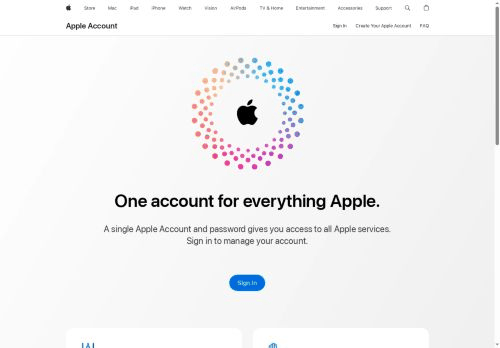
Apple's unified authentication and account management ecosystem offering hardware-bound passkeys, iCloud Keychain, and Hide My Email privacy relays, restricted predominantly to Apple hardware.
Visit Site Google Identity Services
Google's pervasive single-sign-on and passkey management platform, featuring massive ecosystem distribution but tied into Google's advertising and data collection ecosystem.
Visit Site Microsoft Entra ID
Dominant enterprise cloud identity and access management solution powering corporate single-sign-on and conditional zero-trust access controls.
Visit Site Okta / Auth0
Leading independent cloud identity management platform catering primarily to enterprise workforce access and developer-facing CIAM workflows.
Visit Site 1Password
Consumer and business credential vault providing cross-platform password management and client-side passkey synchronization.
Visit Site Bitwarden
Open-source password and secrets management solution offering cross-platform passkey storage, enterprise self-hosting, and zero-knowledge encryption.
Visit Site Ping Identity
Enterprise-grade identity orchestration platform delivering federated authentication, directory services, and fraud detection.
Visit Site Beyond Identity
Passwordless zero-trust authentication provider tying identity validation directly to cryptographic device security postures.
Visit Site Dashlane
Credential management service focusing on consumer and corporate passwordless logins, credential monitoring, and integrated VPN utilities.
Visit Site Yubico
Hardware security key manufacturer and FIDO2 pioneer providing physical authentication tokens for enterprise and high-risk consumer identity assurance.
Visit SiteLaunch Effortless Blogging with Maggie
No more blank pages. Maggie runs your blog with vibe-rich, SEO-tuned, GEO-smart content — built to be loved by search engines and surfaced by AI.

Free Tools
AI Visibility CheckerAI Ideas BrainstormingAI Startup Trend AnalysisAI Project ManagementWordPress CheckerAI Co-Founders
Roadmap
All rights reserved by AI Marketing OS Ltd. Designed & Developed by TOPY.AI .